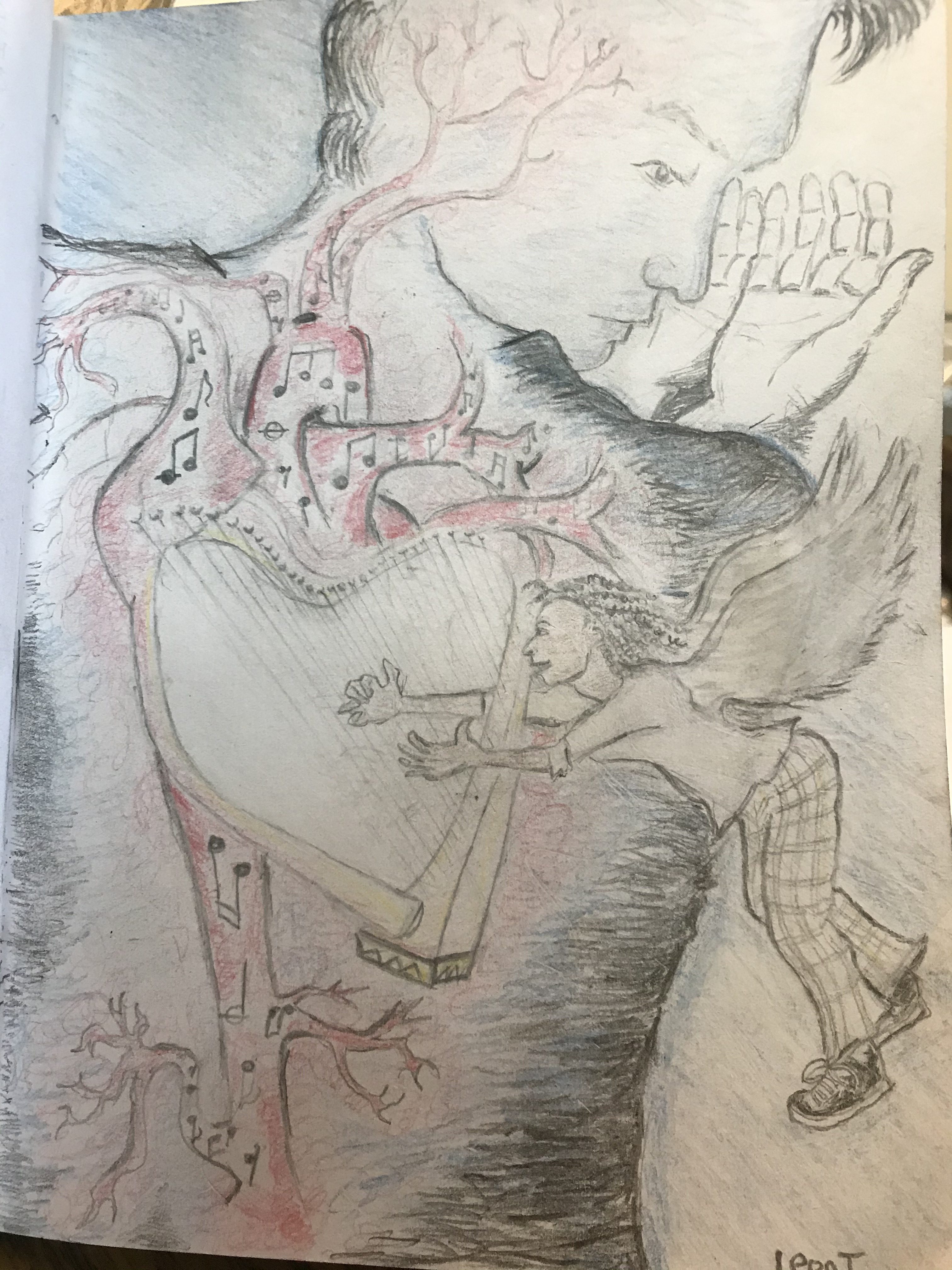
Have you felt bad about feeling bad? Then felt bad about feeling bad about feeling bad? You may have heard about how there is pain, and how suffering is caused by our attitude towards our pain (the feeling bad about feeling bad). The idea is that if we got rid of suffering—the negative thoughts and feelings about pain— then we will feel better, even experience inner peace. There is truth to this idea, but the process of reducing suffering in such a way can be oversimplified to the point of being unhelpful. Here is a more nuanced view that helps with the healing of suffering.
The truth is suffering is a natural part of the human experience, an understandably really difficult and challenging one. Just as sadness is as valid and real human emotion as is happiness, suffering is as valid and real human experience as is the experience of joy.
It is not only physical pain that can hurt, but thoughts and feelings can too. We talk of “painful thoughts” and “painful feelings” because they indeed cause real pain. It is not fake, and the more they are invalidated as “needless suffering”, the more suffering is experienced. This is what happens when people stifle their thoughts and feelings. This is not stoicism, but stifled unaddressed pain.
The idea of getting rid of suffering and somehow zapping away all negative thoughts and feelings about pain does not work in practice either. It not only negates the experience but increases suffering. This is because the stigmatization of suffering causes resistance to suffering, and as stated by psychiatrist Carl Jung, “what you resist not only persists, but will grow in size.”
Why do we feel bad about feeling bad? This is because when this happens, we are telling ourselves as we suffer, “Why am I suffering? I should not be suffering, and I ought not to feel this way.” Then we tell ourselves, “Now why am I suffering over suffering?” Then this is when we feel bad about feeling bad about feeling bad.
So how do we reduce suffering? I will give you a metaphor that will illustrate this. One day I woke up on the wrong side of the bed, with incredibly sharp pain between my shoulders. What did the skilled masseuse do to significantly reduce my pain? He did not go straight for the spot that was hurting, but instead the areas around it, loosening those areas up first. He worked from the outside-in, loosening up the periphery before getting closer to where the pain is. He stopped short of massaging the pain spot the first day.
Why is that the case? If he went directly and immediately for the painful spot or any areas right next to it, it would not only cause intense pain—it would not even address the pain. This is because loosening up the areas around the pain first made the painful area accessible later. The masseuse was able to directly address the pain only after addressing the areas around it.
To work with pain, we need to address the suffering around it first. To work with suffering, we need to address the suffering around the suffering first. Suffering is usually composed of layers, and we cannot zap through all the layers at once. This takes patience, but with each layer that is addressed, we feel better along the way.
If right now I am feeling bad about feeling bad, this is my real experience right now. Dismissing how I am feeling would lead to adding an additional layer of suffering (then I start to feel bad about feeling bad about feeling bad). But if I bear witness to my experience of feeling bad about feeling bad, providing it with space and compassion, I would not add extra layers of suffering. This is because I am with my real experience as it is.
Say I have a hard time providing space and compassion to the part of me that feels bad about feeling bad. Then I don’t have to force myself to do so. What I do instead is take a step back and bear witness to my experience of having a hard time providing space and compassion.
I work from the outside-in, starting from the outer layer of suffering first. Like a Russian doll, I address one doll at a time. I cannot remove them all at once, that would be impossible and thus not be accepting reality. That would be the same as saying “I must remove all suffering and pain at once,” the practice of which is like a masseuse trying to address pain all at once instead of one step at a time. Addressing suffering and pain is a delicately done process.