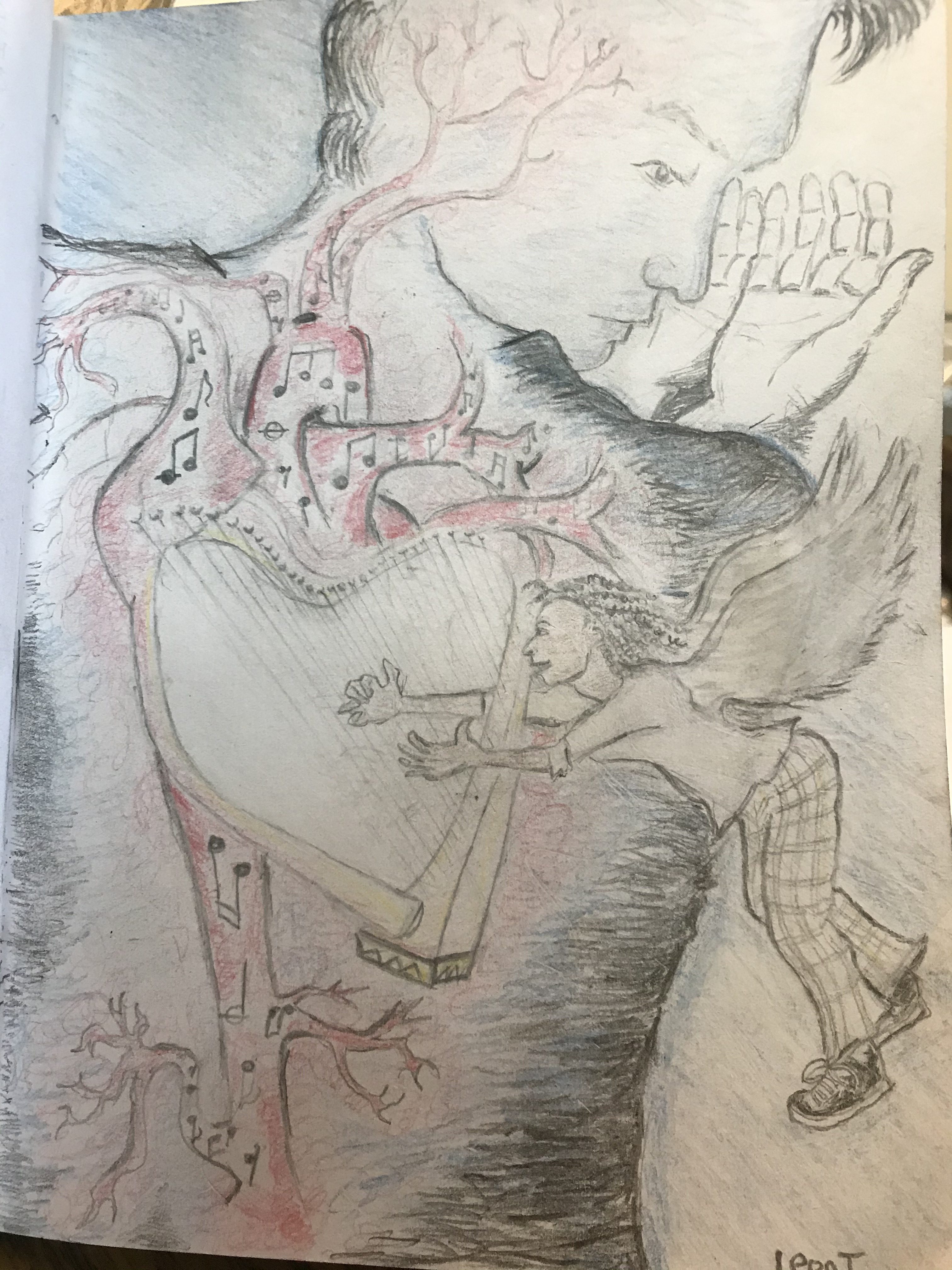
Depression had been the default state of my mind until I discovered mindfulness practice, then mindfulness slowly replaced it as the default state. Over time, my identity with depression and as a depressed person had faded as I patiently practiced loosening the shackles of the constant, ironclad grip of negative thinking. The voices of the two-headed monster of dread and uncertainty no longer hold me under their perpetual spell, as their desperate cries for dominance was soothed and comforted by a mindful, meditative state.
Depression was a prison, and meditation helped me discover this prison was actually an escape room. Instead of the clues to freedom being something I search for, I found it within myself. If I closed my eyes and paid attention to the clues within, the walls of the escape room dissolve. Mindfulness reigns my inner state now, after years of slowly reconstructing it into a realm of peace. It is no longer under the despotic reign of harsh critical self-judgment.
Being so used to the torment of depression, an ongoing storm that was most of my life, I was not aware that a calm mind could exist beyond a brief temporary clear-blue spring. When I was depressed, waves of negative thoughts poured over me like a tsunami, drowning out my sense of selfhood. As each wave of negative thought punched me down, I found myself being dragged along helplessly by them at their mercy. I felt more uncertain of myself, troubled by more and more self-doubting.
When I meditated, for the first time I became the observer of myself being tossed in the storm. I witnessed how the ongoing waves were so fierce and strong, they made me feel powerless to escape, to the point I realized I was experiencing “learned helplessness”—the loss of any belief there was any way out of this purgatory that I was in. I saw myself constantly crouching before the next big wave, the next attack of negative thoughts.
Meditation taught me to unlearn my learned helplessness. As I continued observing my mind, I saw the waves of negative thoughts start to slow down in front of me, until they became almost as still as Hokusai’s Great Wave of Kanagawa painting.
I witnessed the process by which negative thought waves slowly became negative emotions. Once negative thoughts reached my body, like a wave crashing into the ocean, they created a physiological reaction within me. This is the moment negative emotions are created: when negative thoughts become embedded physically into the body as pain, or what Eckhart Tolle calls the “pain-body.”
With the gift of self-awareness that meditation brought, I saw the process of negative thoughts leading to negative emotions unfolding slowly before my very eyes. I saw how negative thoughts led to negative emotions, which branched out to lead to more negative thoughts, which then led to a host of more negative emotions, until there was a whole cascade of thoughts and emotions that came pouring forth as a tsunami that inundated my internal world.
Even the very act of coming to awareness of this happening was healing, because it taught me to be more compassionate toward myself and as to why I felt hopelessly trapped state of mind that I found myself in. Bearing witness to what shaped my negative thoughts and feelings taught me how I got into depression and uncertainty in the first place. When I was depressed, it used to be a dark and sinister mystery how I got into that state. But with the art of meditation, I saw how my depression took shape. It taught me to observe my inner world with curiosity, like a scientist of my own mind, but with the nonjudgmental kindness of a counselor.
After being a kind observer of my thoughts, my intuition told me it was time to meditate on the feeling on personal responsibility; time for self-compassion provided me the time for wisdom. I realized self-confidence arises when I take responsibility for my thoughts and feelings. That does not mean chastising negative thoughts and feelings and banishing them from my mind, like a harsh ruler would, but by taking them through a process of healing, like a good king would who is sensitive to the plight of his kingdom. Part of this healing is to kindly observe the thoughts and feelings within me, and provide them with compassion and understanding.
When I connected with the good, compassionate king within, not only was I able to comfort my negative thoughts and feelings by providing empathy—I was able to address their concerns. I took the overwhelming loops of negative thoughts and feelings and broke them down into the next manageable step and piece, releasing myself of dread and uncertainty. I surrendered clinging to having to know how to deal with everything now, and I focused only what I can control now and the one step into the near future.
I realize that taking responsibility does not mean having to know what the ultimate answers are, or ignoring the pain within. It means listening compassionately to the pain, using my own moral compass to guide myself through that pain, trusting in myself in creating what the next step is for me to gently go, and letting go of the rest to mystery. The path out of the escape room is in my perception of my outer situation and what I can control, not in having to know how to resolve the situation itself and having to control it all. The escape room is mental, not external to me.
When I meditated on this, I noticed my posture shot up from a tense, stooped posture to that of an upright and relaxed one. The first posture represented my body coiling in defeat from the pain of depression and learned helplessness, and the second one represented the self-confidence I developed from meditating. Meditation taught me self-compassion and self-guidance even when all around me was a storm. My body surged with the feeling of bliss and peace, and I smiled.