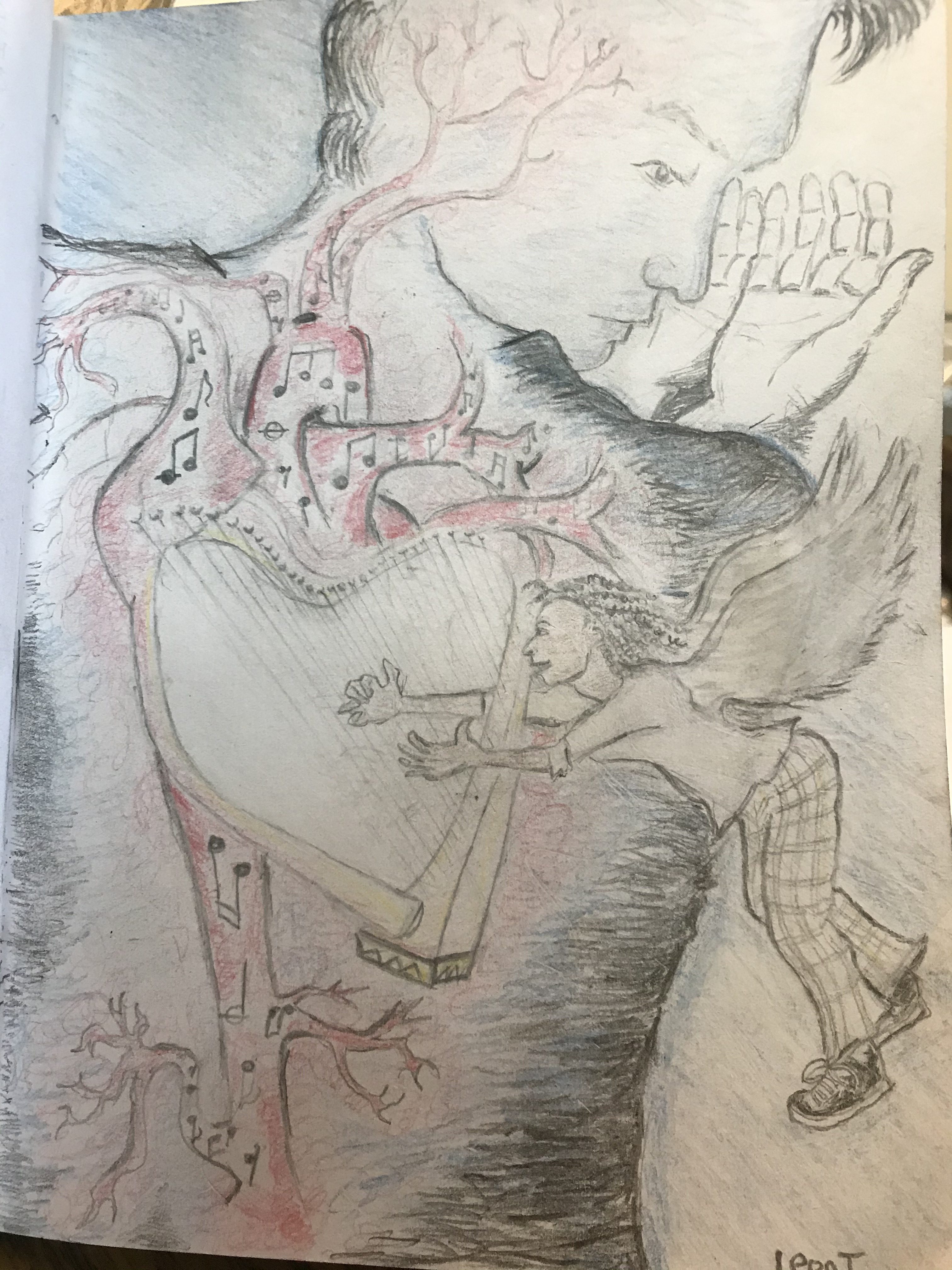
When we do not acknowledge and accept our vulnerable side, that is when it takes most control of us. I find that those who escape their vulnerability are the ones secretly most driven by it. On the outside fierce and independent people, on the inside they are delicate and dependent on their emotions. Their whole life is an arrow upon which the bow that it is thrusted from is their deep wounds. Their life paths are driven mindlessly and blindly in reaction to pain and hurt in their lives, rather than informed by it.
I write this without judgment towards these people. In fact, all of us are in part driven by our vulnerabilities, including myself. In fact, the people I was referring to includes my past self. I learned from personal experience that self-awareness allows us to break free from becoming unconsciously controlled by our vulnerabilities; it does a lot of good to see the role that vulnerability plays in us. That is right: vulnerability has a role to play, it serves a meaningful purpose, a vital function in us. I learned about how through my own challenges with vulnerability.
In my personal life, my own vulnerability had made me really self-controlling without me fully realizing it. I thought I was driven by a healthy need to self-improve and achieve excellence, but really my perfectionism came from a vulnerable fear of not being good enough. As a result, I ended up severely burning out, to the point I had a crippling depression. No matter how hard the side of me that wanted control wanted to take back the reigns from depression, my emotional side prevailed.
Something deep within me did not allow me to take back control of my life until my emotions had their say. I thought it was because I was too weak to triumph over my emotional side, until I realized that finally allowing for that side of me to speak was what I needed. It was an essential part of myself that I needed to listen to, not an enemy within I needed to conquer. An unconscious and deeper part of me intuitively knew this, and it did not allow me to suppress my emotional side anymore.
After some initial trepidation, I listened to my deeper self and took the next brave step: I started to write my emotions down unfiltered, instead of suppressing them as I did out of a sense of misguided virtue. I felt the weight of all my emotions drain out of my veins onto paper until I felt lighter again. I felt I can return back to having self-control without forcing it like I did when I was suppressing my emotions. My self-control became healthier and more balanced and became even better at managing my life, because a well-managed life takes into account emotions.
I find I have two types of clients who struggle, both generally well-meaning and good people—but just like me, have their quirks: one type is very consciously aware of their own vulnerability, talks often of it, and become absorbed by it, and the other type suppresses their vulnerability, talks little of it, and is driven by a strong Inner Manager* that keeps everything under control. For simplicity, I will call the first type the Vulnerable Type and second type the Inner Control Type. Conventional wisdom says the first type fails in life, and the second type succeeds—that is what society tells us. In my own experience, the story is more complicated.
Of course, the Vulnerable Type, who is focused on and can become fixated on their own emotions, has challenges in life because they have not developed a strong-enough self-control that can keep their life organized, structured, and level-headed. They can sulk endlessly in their problems, and without a developed Inner Manager, their problems can take control of them.
However, I found that in some ways they do better than the second type, the Inner Control Type, who is under complete direction of their Inner Manager. By being able to openly talk of their feelings, the Vulnerable Type is able to process them, free themselves of emotional blockages, and magically seem to move on with their lives. The Inner Control Type, on the other hand, gets stuck and trapped with their feelings by avoiding them. Their life mysteriously grinds to a halt no matter how much they push themselves to go forward; their ability to have self-control can only take them so far.
When the Inner Control Type is unwilling to have the patience to fully process their emotions, their emotional side fights them with a vengeance, and no matter how strong their Inner Manager is, those emotions prevail. Once the Inner Control Type is able to get in touch with their emotional side, just like the Vulnerable Type, the emotional blockages free up, and they find that they are naturally able to move forward with their lives.
I saw how my own vulnerability had led me to become the resilient person I am today. I wanted to protect the younger version of myself that suffered from bad social anxiety, and so I went on to develop a superhero version of myself to save the younger version of myself. I felt I was quiet and isolated, easily quit and gave up, which gave me a lot of emotional pain. I went on to create a bolder, persevering self that would prevent me from feeling any of those “bad feelings” again. I challenged myself constantly: I went from very shy to giving a TEDxTalk, making YouTube videos, coaching, running workshops and leading Meetups. All this was good, but later that led me to become over-controlling of myself, burnt out and depressed.
On my path of recovery, I found that when I able to get in touch with my vulnerability, I was able to see how much of it driven the side of myself that tries to be in control. Before, I thought that vulnerability was a fault, until I saw how much it actually helped me become the person that I am: the reason why I had been so driven to thrive was because my vulnerability guided me to. When I was able to express this all on paper, I was able to relinquish excessive control and develop a healthy sense of control. I was able to create a life that was consciously informed by my vulnerability, deeply inspired by it, rather than controlled by it unconsciously.
Acknowledging our vulnerability is not simply about processing our dark emotions so we can make room to do the real work in our lives. It is about mindfully using vulnerability as a vital springboard, as a means we can motivate ourselves to live purposefully. Seeing the role of our vulnerability goes beyond acknowledging our inner demons. It is about embracing vulnerability’s intrinsic value. It allows our life path to be informed by vulnerability in a meaningful way while not being subsumed and controlled by it unconsciously.
*Inner Manager: According to Internal Family Systems, this is the part of ourselves that protects us and structures our lives day-to-day, but it can become overly controlling and can prevent us from feeling our emotions