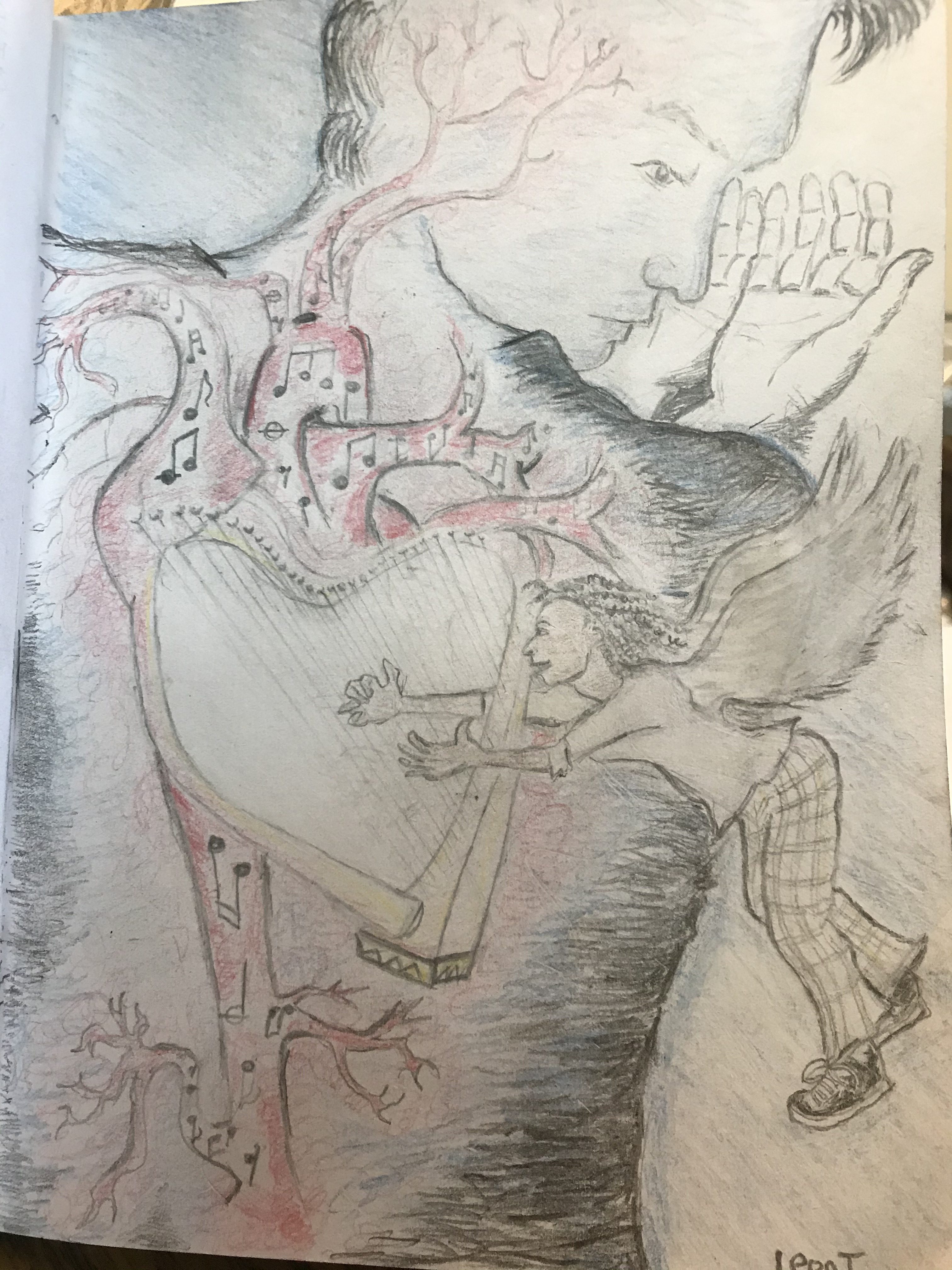
I understand that artificial intelligence (AI) can be a real fun tool to be used for art, especially for getting portraits of yourself, and I am not against AI being used in art (though with regulations to protect artists’ original works). I hope what does not get lost is the appreciation of the artistic process itself in a time when art could be created at the click of a button. I will speak from my own experience making portraits. In the self-portrait I did below, I had only a vague idea of how I wanted the portrait to look like. It was through working with the material in a hands-on process-oriented way did I find the concept behind the portrait emerge overtime: this piece was about flow, the red hands represented dynamic energy of playing guitar in the moment, and the blue represented the calm sereneness felt within when in one with that very moment. Perhaps this could have been an AI prompt to generate art, but I much enjoyed discovering the concept along the way through the process of emergence in the hours-long act of creating. Being able to wrestle with and develop my thoughts over time helped me understand myself and a universal human idea such as flow in a deep and experiential way.

Through the process of working with art, I learned a lot of invaluable skills and lessons, and I am sure a patient viewer of art will learn a lot of valuable lessons from an artist’s process. With every brushstroke I really focused and tapped into myself in the moment to give expression to the piece. When I realize I am inwardly in tune, the piece starts coming together. I made mistakes along the way: for instance, I noticed when I was out-of-tune due to being anxious to just finish the painting and get it over with, I put in way too much purple around one of the arms. I made myself take a break, and come back to the painting. When I came back, I decided to integrate the mistake rather than remove it completely, in such a way the purple adds some extra dimension to the painting. The painting has taught me in a visceral level to embrace mistakes and integrate them into the process of creation, how to take breaks and how to work hard, and how to focus and be in tune with the moment. Sometimes I only realize halfway through what I was trying to express—for example, you can see the guitar extending out to the left of the painting subtly as if to infinity. Halfway through creating that part of the painting I realized I am trying to express the sense of eternity and timelessness to the feeling of flow, and then continued painting to reflect this idea. My unconscious was able to express itself, and only later did I see what it was trying to express.
There are a lot of subtle details along the hours-long creation process that led to wonderful insights, a deep sense of inner healing, accessing my unconscious, and authentic connection with the journey and act of creation in itself—that has also taught me how to be patient with the process of life itself. Painting can take a long time can be a challenging process, but it is worth the payoff, because life too has challenges, and painting equips me with the tools to meet them. You too can learn so much about yourself along the way of making art by understanding the artist’s journey to make it. At the very least be keen to see the thought put into their art.
I know even before AI people already had a short attention span—people usually spend 7 seconds looking at a painting. I hope AI would not be used in such a way that exacerbates a tendency to focus on the end results, the cool, slick, and pretty picture at the end, and on quantity of art made (the superficial aspects of art that have their place but are not everything), rather than the beautiful and intricate process that can go into a singular art piece. If AI could be used in a process-oriented way and help people really engage in and appreciate journey of art more rather than just the destination, I am all for it. Again, so long as artists’ original works are respected.