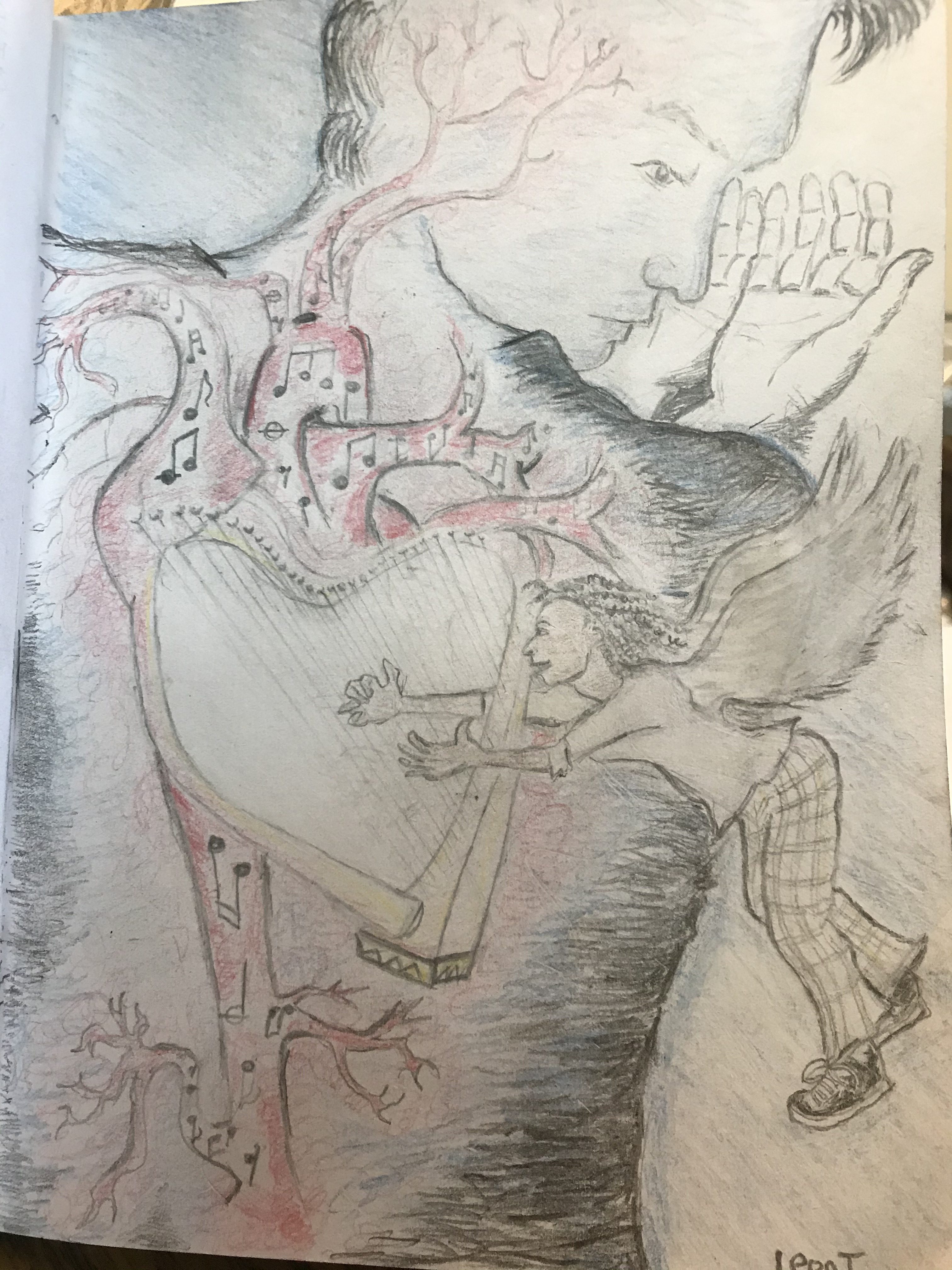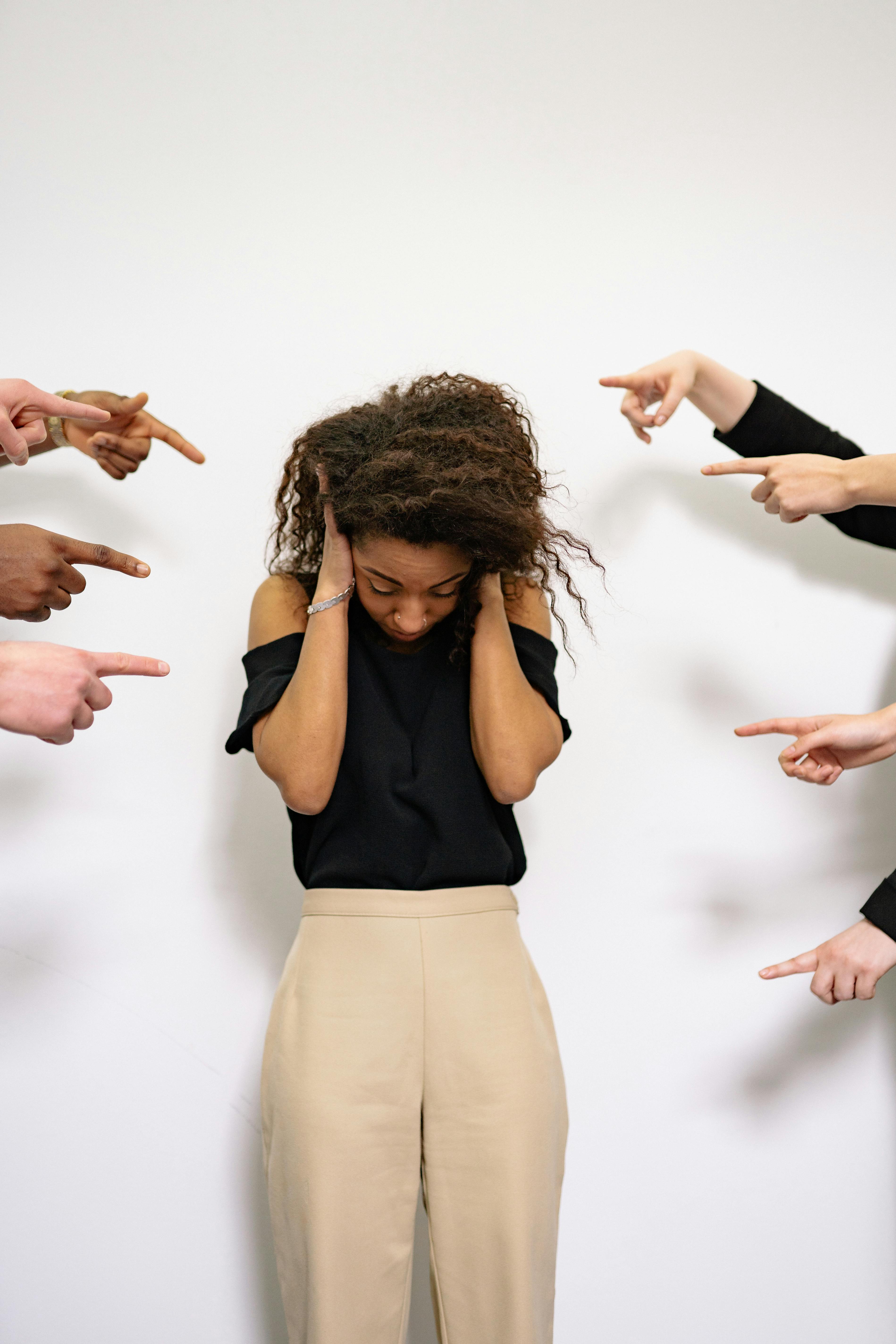
Have you ever woken up to a downpouring of anxiety? This had happened to me on numerous occasions. One time was particularly bad: I remember opening my eyes upon waking up to the drab four walls of my room. My daily worries did not really quite hit me yet, like I was in a lull before a storm, until a torrential anxiety attack rapidly came pouring down on me. Inside a voice in me I call “Voice 1” thundered in panic, “YOU NEED TO GET YOUR LIFE IN ORDER!” It was followed by “Voice 2,” which pleaded to me “You need to just relax and chill” in an exhausted tone of voice (and ironically, in a pressuring way). These two voices, one demanding action and the other demanding relaxation, threaten many people’s minds. I did what prey would do caught between two predators about to pounce on it at the same time: FREEZE. In this case, I froze in mental paralysis.
Then I realized that instead of succumbing to fight-or-flight mode, I can take a few deep breaths and investigate the source of my anxieties with curiosity. Curiosity towards my pain helps my pain, as curiosity is the opposite energy as fight-or-flight, for it engages higher parts of the brain. Curiosity is not there to stifle my anxiety but to shed light on it. It is by nature an accepting rather than rejecting energy: it overcomes anxiety not by rushing to kill it, but through compassion and understanding, which gently and slowly alleviates it.
By fostering curiosity, creative visualization* helped me with my anxiety. I visualized an “anxiety knot” growing in me as Voice 1, which demanded me to get my life in order, and Voice 2, which pleaded with me to relax, fighting with one another like two lions in a cat fight. The more they fought, the more I noticed my anxious nerves wounded together into a bigger and bigger “anxiety knot”.
Using curiosity, I explored compassionately with Voice 1 why is it demanding me to get my life in order. When I empathize with it, I am able to understand where it is coming from. Voice 1 opened up to me how it misses how productively creative I was as a kid: I was always drawing, writing stories, poems, and making music compositions. I had done very little creative activity in recent years, and it made Voice 1 feel sadness for the loss. It wanted me to be happy and productively creative again, and so it was demanding me to take action. When I empathize with its sadness, Voice 1 started to loosen its wound-up strings in my anxiety knot. This freed up energy for me to then focus on Voice 2.
I then explored with Voice 2 why is it telling me to relax. It shared with me how much stress the world had been putting on me in my life, and this resulted in my unhappiness. It sees Voice 1 as contributing to this stress by being demanding. Voice 2 also wanted me to be happy, like Voice 1, but by taking it easy. By understanding Voice 2, it also loosens its wound-up strings in my anxiety knot.
What helps me is to name the pattern: when Voice 1 demands, “I should get back to being creative”, this only leads to Voice 2 to counter it by pleading with me to relax. As a result, I find I become passive in order to escape anxiety and pressure. When I hound myself to work, I spend more time freezing and doing nothing. I find as a therapist, many people I work with often encounter a similar kind of pattern as this one, and it appears to be a common pattern.
When I strive to understand both Voice 1 and Voice 2, they lessen their combativeness towards each other, since they start to see that they share the same purpose: making me happy. Often opposing voices within us seem to want conflicting things, but at a deeper level, they actually want the same thing—our own happiness. They just have different ideas of how to go about getting happiness. The deep underlying purpose of happiness is the same even though on the surface the means and the desired actions to accomplish this purpose are different. This understanding helps provide peace, in knowing we are less divided than we think we are.
(I may be writing up a 2nd part to this in which I show how I am able to bridges the gap between Voice 1 and Voice 2. How can I take action without pressuring myself?)
*According to The Body Keeps the Score, by Dr. Bessel Von Der Kolk, creative visualization is an antidote to trauma. When we experience a fight-flight response due to trauma, creativity shuts down. By calming our bodies and reigniting creativity, our minds open up and we can envision solutions and possibilities.